Journal ·
Choosing a Coat Color by Personal Color: From Camel to Navy
Your coat is the biggest color you wear all season. Coat colors to try first by undertone and season, how to rescue a coat you already own, and four checks before you buy.

When the cold sets in, the coat is the first thing you reach for. Yet the camel coat that looked so polished in the store can make your face look oddly yellow in the mirror, and the black coat that supposedly suits everyone can make you look tired. Usually it isn't the cut. It's how the color works with your face.
This guide walks through choosing a coat color with personal color in mind: how to read the classic coat colors, which shades to try first for each season, and what to do when a coat you already own doesn't quite work. At the end, we'll show how AUBE EDIT gives you a free first read on your color direction.
Why coat color matters so much
A coat is the largest block of color you wear. Its collar sits right under your face, so its color reflects straight back onto your skin. The right coat makes your complexion look clear. The wrong one brings out shadows, redness, or a sallow cast.
A coat is also something you wear for years. A lipstick that misses can go back in the drawer, but a coat sits under your face every morning. That's why, for coats in particular, it pays to choose the color your face looks at ease in before the trend color.
All season long, your coat is the biggest color sitting right below your face.
How to read the classic coat colors
Even "basic" colors behave very differently. Looking at them through the three lenses of personal color, temperature (undertone), value and chroma, makes it easier to see which side suits you.
- Camel and beige: warm colors with a yellow base. They often flatter warm undertones. If you're cooler, a greyed beige or taupe looks less yellow.
- Black: the deepest, highest-contrast option. It sharpens faces with strong contrast but can feel heavy on softer, lighter coloring. Charcoal is a good alternative.
- Navy: more versatile than people expect. Still, a soft, light navy and a deep ink navy read very differently, so compare within navy too.
- Grey and charcoal: blue-leaning greys sit on the cool side; brown-leaning warm greys sit on the warm side.
- Ivory, cream and white: pure white is cool and crisp; ivory and cream are warm and soft.
- Color coats like olive or burgundy: olive and terracotta brown suit warm, muted coloring; burgundy and wine tend to suit deep, cool coloring.
Coat colors to try first, by season
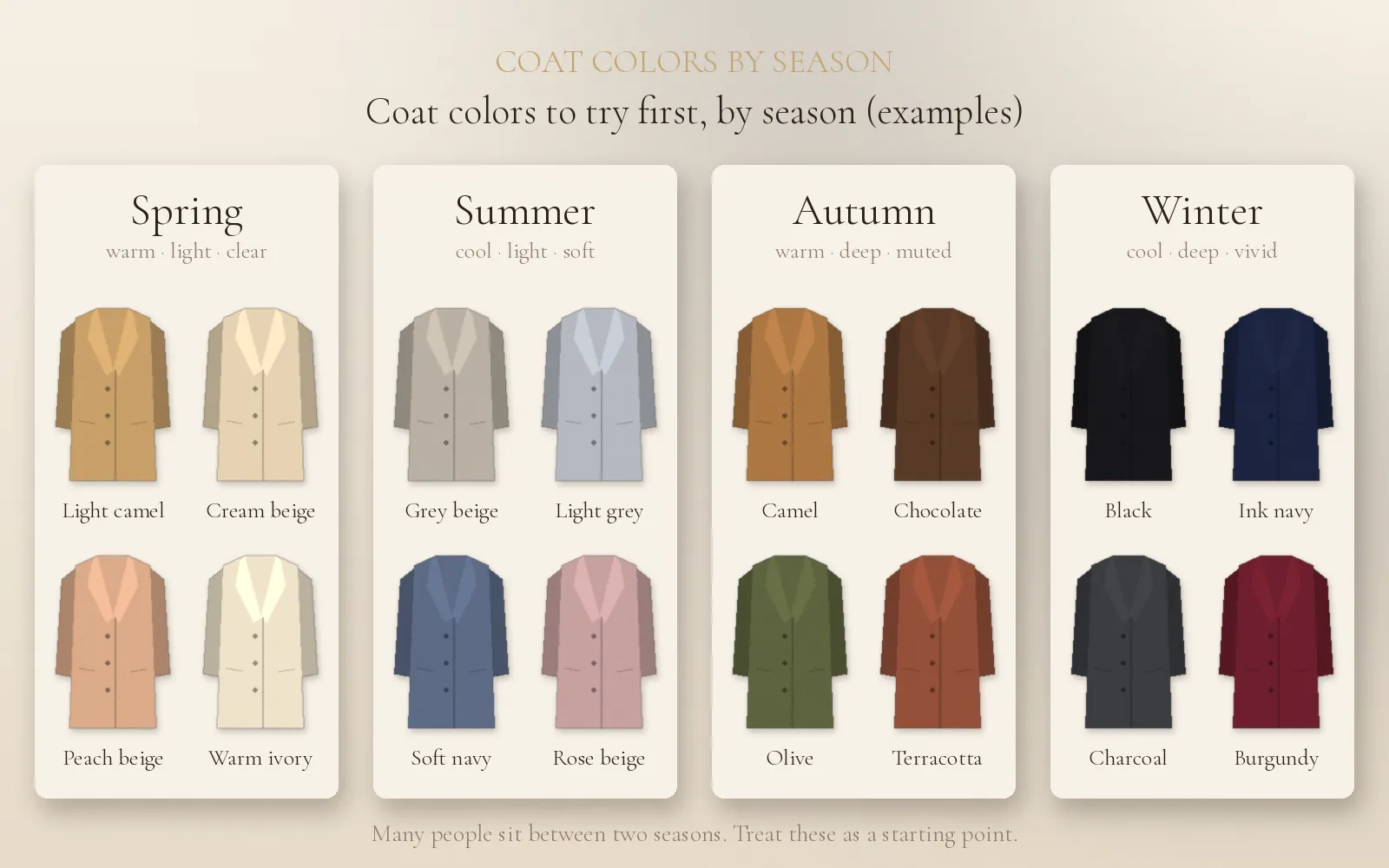
- Spring: warm, light, clear shades such as light camel, cream beige, peach beige and warm ivory. Very dark browns or black can overpower the face.
- Summer: cool, soft shades such as grey beige, light grey, soft navy and rose beige. Greyed neutrals usually feel easier than a strongly yellow camel.
- Autumn: warm, deep, muted shades such as camel, chocolate brown, olive and terracotta brown. This season has the widest range of coat options.
- Winter: cool, deep, vivid shades such as black, ink navy, charcoal and burgundy. Clear contrast keeps the face defined.
Season names are just a starting point. Plenty of people sit between two seasons, for example "mostly Autumn, but chocolate brown feels heavy." Rather than forcing yourself into one label, remember which temperature and depth of color brings your face to life.
When a coat you own doesn't quite work
You don't need to replace the black or camel coat already in your closet. The key is to change the color closest to your face. The coat covers your body, but the scarf, inner layer and shirt collar are what actually touch your face.
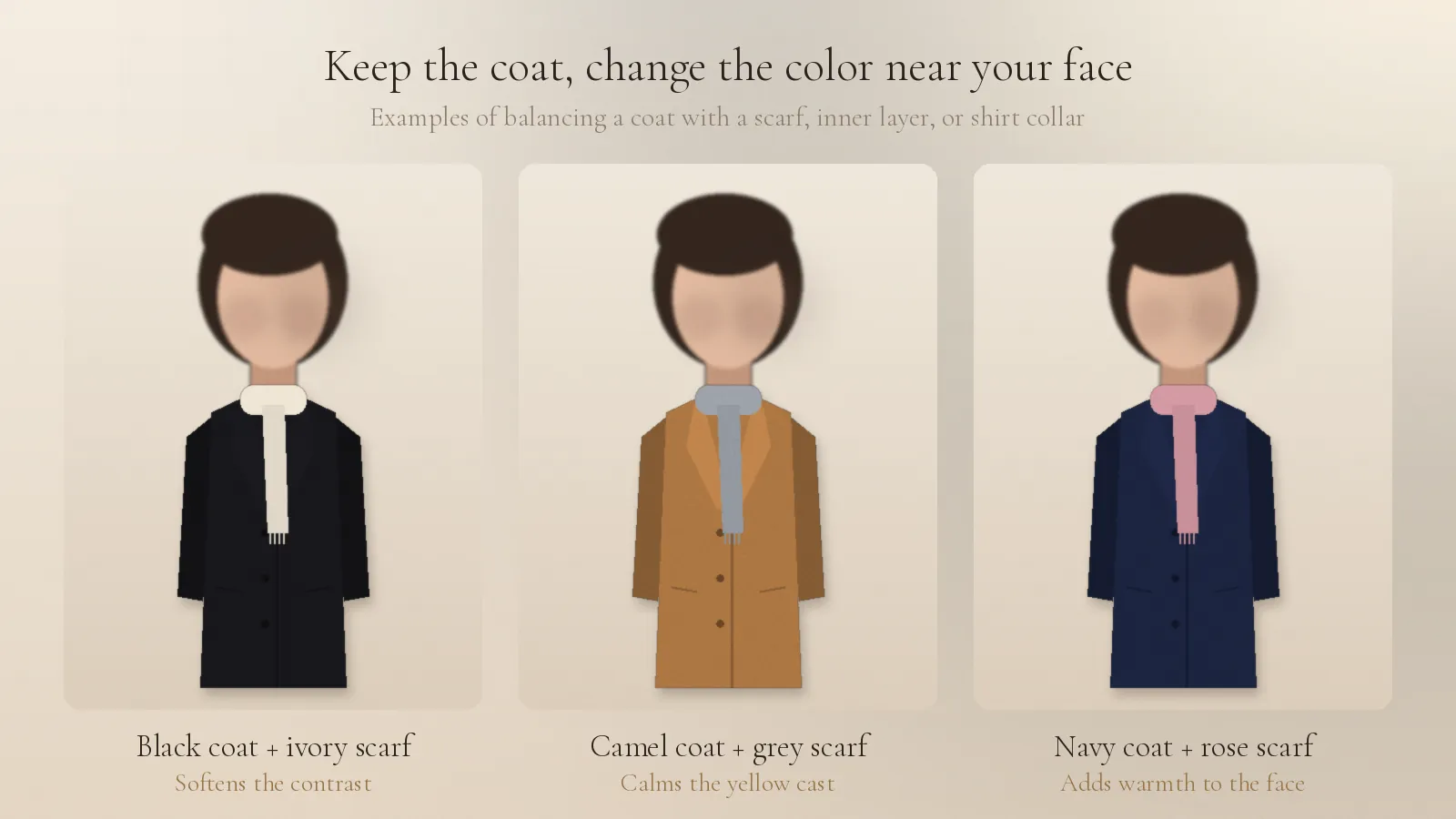
- If a black coat looks heavy: an ivory or cream scarf, or a light turtleneck near the face, softens the contrast.
- If a camel coat looks yellow: a grey or navy scarf calms the yellow cast.
- If a navy or charcoal coat looks pale: bring rose, coral or burgundy close to the collar for a touch of warmth.
Accessories work the same way. Depending on whether gold or silver suits you, simply changing earrings or buttons can change how the whole coat reads.
Four checks before you buy a coat
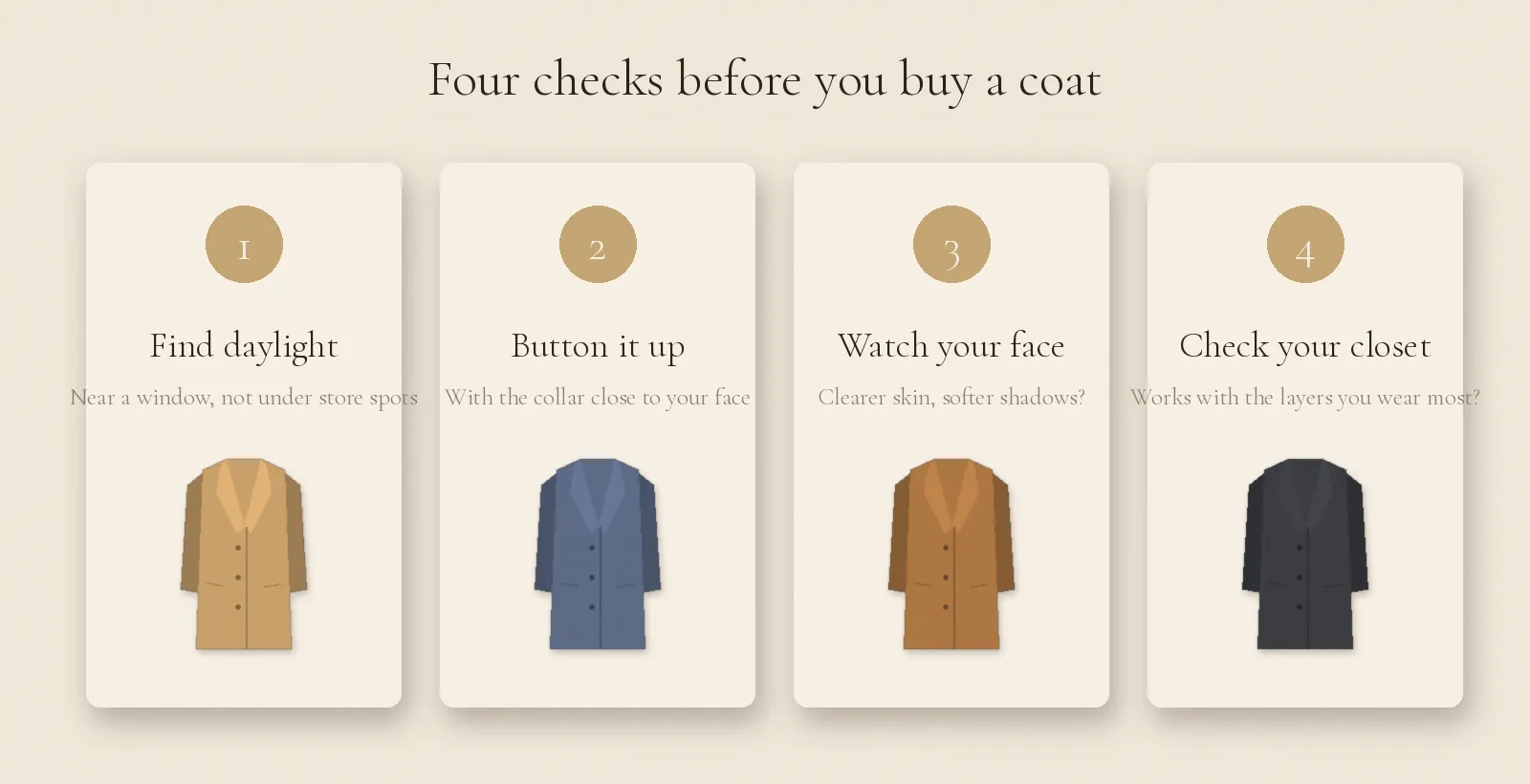
- Find daylight: store lighting makes most colors look warm and luxurious. If you can, check again near a window or the entrance.
- Button it up: with the collar close to your face, you see how the coat will really look on you. Worn open, the inner layer dominates.
- Watch your face, not the coat: the color that makes your skin look clearer, with softer shadows and less redness, is closer to the right one.
- Check your closet: picture it with the tops, shoes and bags you wear most. Even a flattering color goes unworn if it clashes with everything else.
When shopping online, remember that product photos look different on every screen. Look at customer photos taken in daylight, and check the exchange and return policy first.
Don't decide from a single photo
Many people compare coats with a selfie instead of a mirror, but cameras auto-correct color and every screen renders it differently. That's why one photo isn't enough to say a coat definitely doesn't suit you. Use photos as a hint, then confirm in front of a mirror in natural light.
Check your color direction with AUBE EDIT
Before choosing something you'll wear for years, get a quick read on your color direction. LOOK is free. Sign up, share two photos and answer a few short questions, and you'll get a story card with your type, four color chips that suit you and a one-line note. Photos are used only to create the card and aren't stored on our servers. LOOK is a first read, not a definitive diagnosis, so hold the colors on your card up next to your coat and scarf to see for yourself.
If you want to go deeper, there's BOOK (paid). It covers the colors you were unsure about and lays out what to buy and what to skip across makeup, clothing, glasses and hair color in a detailed guide. For color styling advice ahead of an important day, there's also ATELIER (paid subscription). Both are paid products, so start with LOOK and choose them when you need them.
At a glance
- A coat is the largest color you wear, so it has a big effect on how your face looks.
- Read even basic colors by temperature, value and chroma.
- Seasonal coat colors are a starting point. Sitting between two seasons is normal.
- Rescue a coat you own by changing the scarf, inner layer or collar color near your face.
- Choose coats in daylight, buttoned up, while watching your face.
- Get a first read with free LOOK, then move on to paid BOOK when you want more depth.